
When you are looking for support with anxiety, stress, habits, pain, or emotional challenges, two options may appear side by side: traditional therapy and hypnotherapy. Which one is right for you?
The answer is rarely as simple as choosing one over the other. Traditional therapy is a broad category of psychological treatment, while hypnotherapy uses hypnosis as a focused clinical technique. In some cases, the two can work together.
This guide explains how each approach works, where they differ, what the evidence suggests, and how to think about your options without assuming that one method is a universal answer.
Key idea: Hypnotherapy is not automatically a replacement for psychotherapy. It may be one tool within a thoughtful, evidence-informed treatment plan.
Traditional Therapy Is Broad & Collaborative
“Traditional therapy” generally refers to psychotherapy or talk therapy. It is a collaborative treatment in which a trained mental-health professional uses conversation, assessment, and evidence-based methods to help you understand and change unhelpful thoughts, emotions, behaviors, or relationship patterns.
The term covers many different approaches, so two therapy experiences may look quite different. Common examples include:
Cognitive behavioral therapy (CBT): Focuses on connections among thoughts, feelings, and behaviors, while helping you test new ways of responding.
Psychodynamic therapy: Explores patterns, emotions, relationships, and experiences that may influence your current life.
Humanistic therapy: Emphasizes self-understanding, personal growth, and the therapeutic relationship.
Integrative therapy: Combines ideas and techniques from more than one approach to fit the person and their goals.
Sessions may include discussing recent events, exploring memories or beliefs, learning coping skills, setting goals, and practicing new responses between appointments. The focus can be both greater understanding and practical change.
Hypnotherapy Uses Focused Attention
Hypnotherapy is the clinical use of hypnosis within psychological treatment. It typically involves guided attention, relaxation, imagery, and therapeutic suggestions intended to support a specific goal, such as managing pain, reducing anxiety, improving sleep, or changing a habit.
During hypnosis, a practitioner may guide you to focus inward, notice sensations or images, and rehearse a different way of responding. Some practitioners also teach self-hypnosis for use between sessions.
Hypnosis is not mind control. Clients generally remain aware and retain agency throughout the experience. A clinician can offer suggestions, but the client continues to participate in the process and make choices.
Myth and Reality
Myth: Hypnosis means giving up control.
Reality: Hypnosis is generally described as focused attention with less awareness of outside distractions and increased responsiveness to suggestion. The experience can vary from person to person.
Quality hypnotherapy should still include discussion, informed consent, goal-setting, and time to process the experience. The hypnotic portion is one part of the work, not a substitute for thoughtful clinical care.
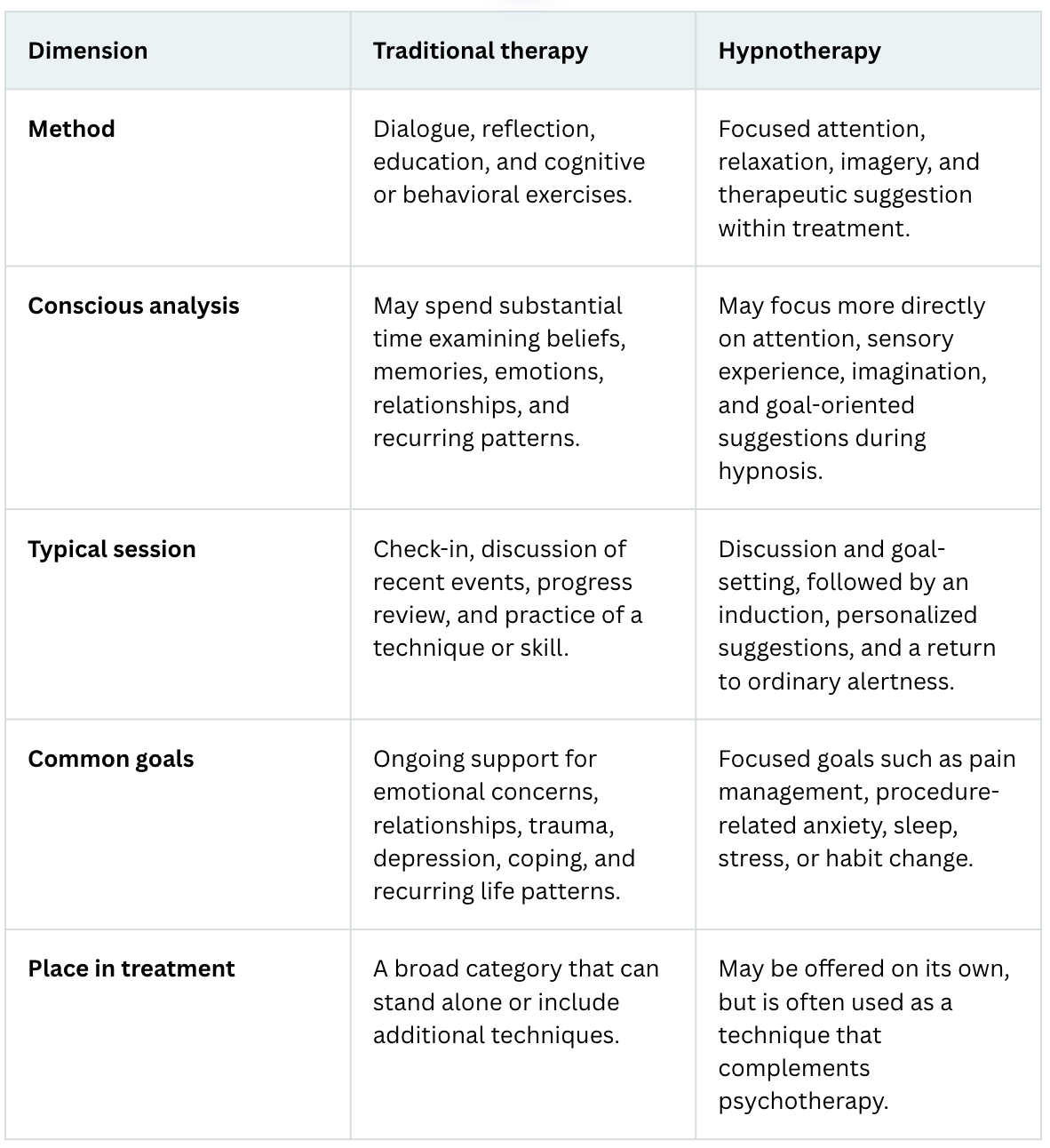
How the Approaches Compare in Practice
The clearest difference is the main tool each approach uses. The comparison below is a general guide. The actual experience depends on the practitioner, treatment plan, and your goals.
What the Evidence Can and Cannot Tell Us
Psychotherapy has a broad evidence base across many mental-health concerns. Its usefulness depends on factors such as the treatment approach, your needs, the quality of the therapeutic relationship, and how well the plan fits your situation.
Hypnosis also has research support for some uses, particularly pain management, this includes emotional and psychological pain. It can help with eating behaviors, sleep, stress, phobias, and addiction.
Professional information from the American Psychological Association reflects the broad role of psychotherapy, while its overview of hypnosis describes hypnosis as a tool with more condition-specific support.
Keep the claim proportional to the evidence. Research support for one use does not establish that an approach will work for every concern or every person. No treatment should come with promises of guaranteed results.
Choosing an Approach or Using Both
There is no universal right choice. Your goals, preferences, health history, and access to qualified care all matter.
Traditional therapy may be worth considering if you want ongoing support for complex emotional issues, relationship concerns, trauma, depression, or recurring patterns in your life.
Hypnotherapy may be worth considering when you have a focused goal, such as managing pain, reducing procedure-related anxiety, improving sleep, or changing a habit. It may also appeal to people who respond well to visualization and guided exercises.
How They May Work Together
Hypnotherapy is often best understood as a technique that may complement psychotherapy rather than automatically replace it. For example, a qualified therapist may integrate hypnosis with CBT to support pain management, anxiety treatment, or behavior change.
If you are exploring either option, consider asking:
How is the practitioner trained?
How will your goals be defined?
What evidence supports the proposed approach?
How will you give consent and provide feedback throughout the process?
Final Thoughts
Traditional therapy and hypnotherapy share the goal of helping people make meaningful changes, but they use different primary methods.
Psychotherapy is a broad category of collaborative psychological treatment. Hypnotherapy uses hypnosis and therapeutic suggestion as a specific clinical tool.
If you are considering support, start with your goals and discuss them openly with a qualified professional. Together, you can explore an approach, or combination of approaches, that is appropriate, evidence-informed, and respectful of your preferences.
Emily Arth, MSW, LCSW, C.Hyp is a certified hypnotherapist, as well as a world-class psychotherapist specializing in trauma treatment. Since 2011, she has been delivering powerfully life-altering transformations to her clients.
CHECK OUT SERVICES HERE
CONTACT US AT (417)372-2921
EMAIL: EARTH@EMLIFECOUNSELING.COM
Available Monday through Friday 9am-6pm
Serving virtually from Columbia, Missouri