
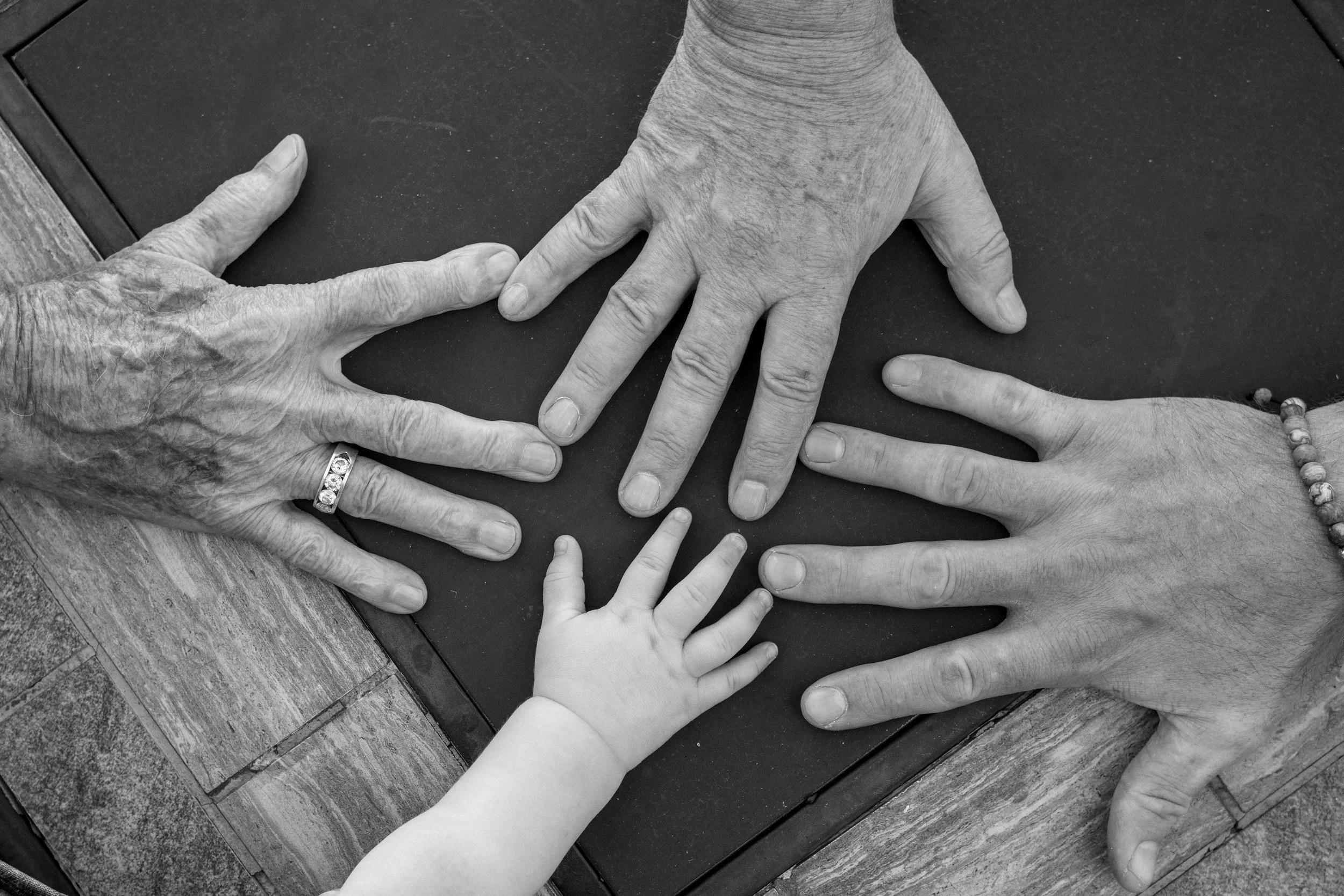
Have you ever recognized a pattern in yourself and wondered, “Where did this come from?”
Anxiety, hypervigilance, people-pleasing, emotional shutdown, difficulty trusting others, and an intense need for control can sometimes appear across generations of the same family. We know that intergenerational trauma can be passed down through learned behavior, attachment patterns, family dynamics, and environmental experiences. But researchers are also studying another fascinating piece of the puzzle: epigenetics.
What Is Epigenetics?
Your DNA contains the genetic instructions you inherited from your parents. Epigenetics refers to biological processes that influence how genes are expressed without changing the underlying DNA sequence.
Think of your DNA as an instruction manual. Epigenetic processes help determine which instructions are more or less accessible to the body.
These processes are influenced by many factors, including development, nutrition, environmental exposures, hormones, and stress.
This is where trauma becomes particularly interesting.
How Trauma Affects the Body
Trauma isn't stored only as a conscious memory. Chronic or overwhelming stress can affect the brain, nervous system, hormones, and stress-response systems.
If you grow up in an unpredictable or unsafe environment, your nervous system may become highly skilled at detecting danger. You might learn to monitor people's moods, anticipate conflict, suppress your needs, or remain constantly prepared for something to go wrong.
These responses aren't necessarily signs that something is “wrong” with you. They may represent adaptations your body developed to help you survive your environment.
Research has also found associations between severe stress and epigenetic changes involving biological systems that regulate the stress response.
Can Trauma Actually Be Passed Down Through Generations?
This is where the science requires some nuance. There is strong evidence that trauma can affect subsequent generations, but this happens through multiple pathways.
Children can inherit family beliefs, attachment patterns, coping strategies, relationship dynamics, and environmental conditions. A parent's unresolved trauma can also influence their emotional regulation and parenting, which shapes the developing nervous system of their child.
Researchers have additionally found epigenetic differences associated with parental trauma and adversity. Animal studies provide some of the strongest evidence for biological effects persisting across generations. Human research is promising but much more complicated because genetics, pregnancy, parenting, culture, and environment are difficult to separate.
So it isn't scientifically accurate to simply say, “Your grandmother's trauma changed your DNA.”
A better way to understand it is that trauma can influence biological stress systems, while family patterns and environments can carry adaptations forward from one generation to another.
What Intergenerational Trauma Looks Like
Sometimes what gets passed down isn't a specific traumatic event. It's a survival strategy.
A family that has experienced generations of instability may develop the rule:
Always be prepared for something to go wrong.
A family shaped by addiction might learn:
Don't talk about what happens inside this family.
A child raised by an emotionally unpredictable parent might learn:
Keep everyone happy so you can stay safe.
Other inherited family rules might sound like:
Never depend on anyone.
Don't show weakness.
You have to earn love.
Your needs come last.
Family comes first, regardless of how they treat you.
A child may never know where these beliefs originated. They simply learn, “This is how relationships work.” Over time, these patterns can influence attachment, boundaries, emotional regulation, self-worth, parenting, and intimate relationships.
Your Nervous System May Be Following an Old Family Rule
One of the most useful questions in trauma therapy isn't:
“What's wrong with me?”
It's:
“What did my nervous system learn?”
And sometimes we need to go one step further:
“Where did my family learn this?”
Maybe previous generations survived poverty, abuse, addiction, abandonment, war, discrimination, loss, or emotional neglect. Behaviors that appear dysfunctional today may have originated as effective survival strategies in a very different environment.
The problem is that survival strategies can continue long after the original danger is gone.
Intergenerational Trauma Is Not Your Destiny
Understanding epigenetics and generational trauma should not leave you believing that you are biologically doomed to repeat your family's history…You aren't.
The brain and nervous system retain the capacity to change. People can learn emotional regulation, develop healthier attachment patterns, establish boundaries, process trauma, build safe relationships, and create environments very different from the ones in which they were raised. Healing intergenerational trauma often begins with recognizing:
“This pattern existed before me, but it doesn't have to continue through me.”
You can learn emotional regulation after generations of emotional suppression.
You can establish boundaries after generations of people-pleasing.
You can create secure relationships after generations of instability.
You can speak openly after generations of secrecy.
You can learn to rest after generations organized around survival.
Understanding where a pattern came from doesn't excuse harmful behavior, nor does it require blaming previous generations. It gives you context.
You may have inherited family patterns that you never consciously chose. But healing gives you the opportunity to decide what you want to carry forward—and what ends with you.
Your family's trauma may help explain your story. It does not have to determine how the story continues.
Emily Arth, MSW, LCSW, C.Hyp is a certified hypnotherapist and psychotherapist specializing in trauma treatment. She helps individuals heal dysfunctional patterns passed through multiple generations.
CHECK OUT SERVICES HERE
CONTACT US AT (417)372-2921
EMAIL: EARTH@EMLIFECOUNSELING.COM
Available Monday through Friday 9am-6pm
Serving virtually from Columbia, Missouri